
Most students will tell you they have “thought about” their future. They’ve taken a quiz that told them they might be good at healthcare. They’ve attended a career fair and grabbed a brochure from a table. They’ve filled out a form naming three careers they’re interested in. And then, more often than not, they’ve moved on. Because no one handed them a next step.
That’s not a student problem. It’s a planning problem.
Middle and high schools put real effort into career readiness. Across the country, counselors and career advisors work with students to identify strengths, explore careers, and connect academic choices with future goals. The American School Counselor Association (ASCA) has built a national framework that positions career development as a core pillar of student success, alongside academics and social-emotional growth. Best-practice programs emphasize exploration of interests, connection to the world of work, and aligning those insights with postsecondary pathways like college, technical training, or direct workforce entry.
Schools use a wide range of tools and activities to support this work. Career counseling programs are designed to help students explore interests and postsecondary options. Career fairs, workshops, and employer partnerships give students real exposure to jobs and industries they might not encounter otherwise. Digital platforms like interest inventories and career information systems match students to broad career clusters or pathways. Structured frameworks like Individual Career and Academic Plans (ICAPs) and Individual Learning Plans (ILPs) help schools document and track where students say they want to go. Many schools also integrate career themes into classroom instruction and experiential activities like job shadows and internships.
These strategies matter. They give students vocabulary and awareness. They help students see connections between what they’re learning and the world they’re preparing for.
But there’s a critical gap, and most schools know it exists.
Here’s the honest reality: even well-resourced schools are fighting structural headwinds when it comes to individualized career planning.
The national student-to-counselor ratio is currently 372-to-1, nearly 50% higher than the 250-to-1 ratio that ASCA recommends. And in elementary and middle schools, that number balloons to anywhere between 571 and 694 students per counselor. Public school counselors spend, on average, only about 21 percent of their time on postsecondary counseling, the rest consumed by personal needs counseling, course scheduling, administrative duties, test coordination, and more.
That’s not a counselor failure. That’s a capacity problem. And no matter how skilled or dedicated a counselor is, a 372-to-1 ratio makes truly individualized, ongoing career planning nearly impossible to deliver at scale.
The result? Most career readiness work in schools ends at exploration. Students learn about careers, but they don’t always build a concrete plan for pursuing one. Counselors might walk students through broad frameworks, host a fair, or assign an interest inventory, and those are genuinely useful touchpoints. But students are often left with a static checklist, a cluster label, or a general suggestion that isn’t tailored to their grade level, their location, or where they are in their thinking right now.
Digital systems show interests. Frameworks capture intentions. But neither one translates those inputs into an evolving, actionable game plan that follows the student from middle school through graduation.
That’s the gap. And that’s exactly what Orchard’s Action Plan is built to close.
Action Plans are a feature inside Orchard’s AI career readiness platform. It’s designed to take students from “I think I might be interested in this” to “Here’s exactly what I should do and when.”
Rather than presenting students with a list of broad career categories or a one-time reflection exercise, Action Plans builds a personalized, step-by-step roadmap based on where a student is right now, their grade level, their location, and the career paths they’re actively exploring. Plans aren’t static documents that get filed away. They’re living, evolving tools that grow with the student.
Here’s what makes Action Plans different:
Personalization by default. Every plan reflects the student’s grade level and location, so the milestones and timelines actually match the decisions they need to make, not generic advice meant for a hypothetical student.
Multiple paths, side by side. Students can build plans for different career interests and compare them. a feature that’s especially powerful for students who are still figuring out what fits. Exploration and planning happen together, not sequentially.
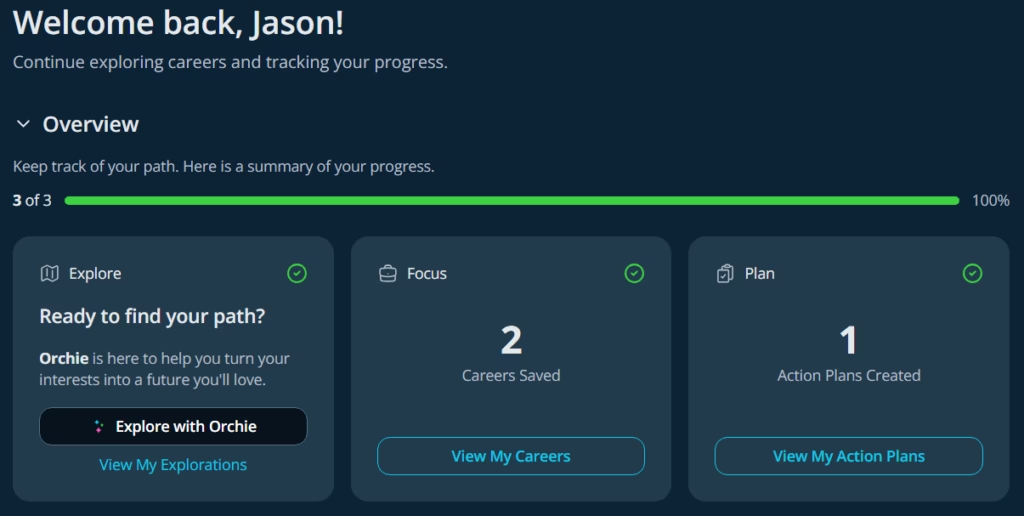
Student-driven flexibility. Students can add milestones that matter to them personally, adjust timelines, and revisit decisions as their thinking develops. The plan moves with the student, not ahead of them.
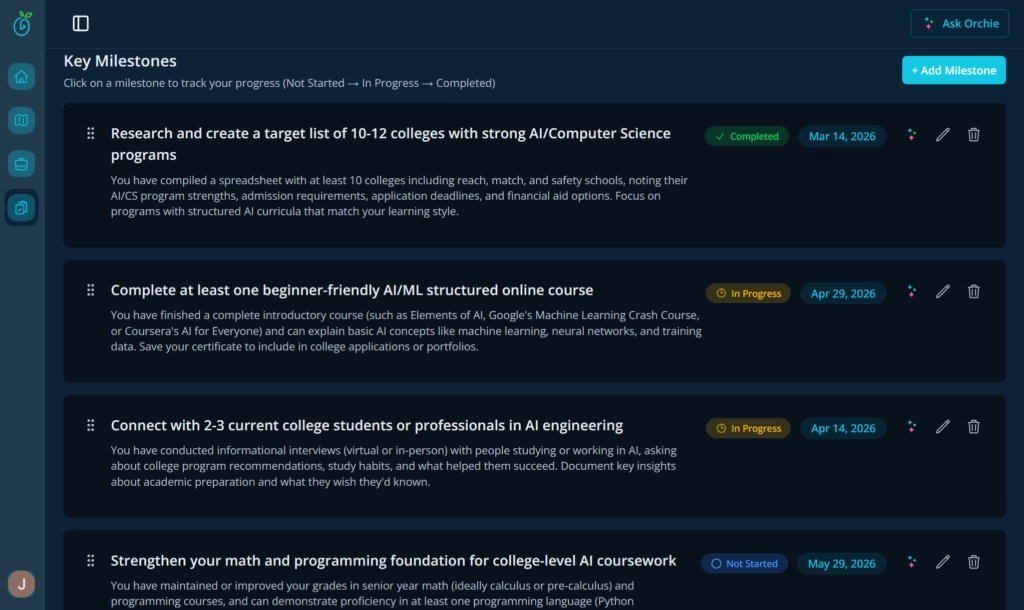
Progress tracking that motivates. As students complete steps, they check them off and see real-time progress, turning abstract planning into concrete momentum.
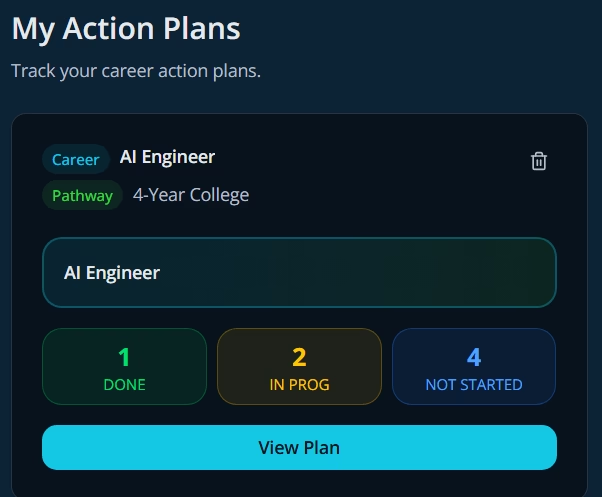
AI coaching from Orchie. Orchard’s AI buddy, Orchie, sits alongside the plan to help students refine their thinking, answer questions, and work through specific tasks. It’s the kind of ongoing, low-friction support that counselors want to provide but simply can’t deliver at scale.
Schools already have the foundation. They have curriculum, counselors, career fairs, interest tools, and graduation frameworks. What they’ve been missing is the bridge between awareness and action, something that translates all that exposure into a clear sequence of steps each individual student can actually follow.
Orchard’s Action Plans build that bridge.
For counselors, it means they can walk into an advising conversation with documented, real steps to react to, not a blank slate or a vague interest area. The conversation becomes more productive and more meaningful, and students arrive more prepared.
For administrators, it means career readiness doesn’t have to live solely in the counselor’s office. Action Plans scale individualized planning across an entire school or district, so every student has a real roadmap, not just access to one if they happen to get an appointment.
For students, it means ownership. Career planning stops being something that happens to them in a scheduled activity and starts being something they’re driving themselves, with support, at their own pace, connected to goals they actually chose.
Most current approaches help students know their options. Orchard’s Action Plans help students act on them in a meaningful sequence, with the support to keep going.
If your school is ready to move beyond checklists and give every student a real plan, Orchard was built for exactly that.
Explore how Orchard can help your school or district today →